
That scene broke me. If you’ve read the book, you know what scene I’m talking about. I read comments about how the book would cause you to cry and traumatise you, so I went into it ready for the worst. There were enough injustices to have me more than upset, but I steeled myself and after a while, I let my guard down. I had an idea of what was coming when I read the horrible point of view, but somehow, I had no idea how much it would mess with me.
I read that scene by 10 p.m. and called my friend, crying. He had no idea what happened and didn’t get the whole gist with my wailing and sniffling, but he comforted to the best of his abilities. Poor guy. He didn’t know it was Chimeka.
Chimeka did me dirty.
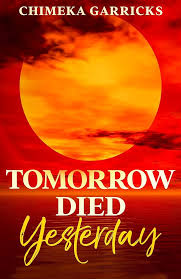
And he’d probably do you just as dirty if you read the book, Tomorrow Died Yesterday.
Tomorrow Died Yesterday is a book about four friends from the riverside town, Asiama Town, and flits between their childhood (as far back as 1970 when they were all born) and 2004 when the story culminates. The lives of these friends, Amaibi, Doye (Doughboy), Kaniye and Tubo, become intertwined when a routine kidnapping by Doye goes wrong.
Doye, an infamous militant, kidnaps a white man, and Amaibi, the one who wouldn’t hurt a fly is forced to take the fall. It doesn’t help that the government wants him taken out because as an activist, especially one who is honest, he is a threat to them. The failed kidnapping and Amaibi’s incarceration begin a series of events that would intertwine the lives of the old friends and make up the story.
Though the story is told from the point of view of all four friends, and Deola (a secondary character), it is a story about oil. Oil in the Niger Delta, oil spillages, the effect of oil on the community where it is drilled, the people tempted by oil money. This story not only gives us a glimpse into the politics of oil but overdoses us with delicious insight into the lives and minds of the people living in communities damaged by the greed of oil companies and the horror of the Nigerian government.
By their person and distinct approaches to life, the characters represent different kinds of Nigerians : Amaibi, an honest activist who chooses to remain righteous and to stick to his faith through the evil he suffers; Doye, an angry (and rightly so) citizen who refuses to be cowed into silence by the injustices of the oil companies and the government, but instead grabs his share of the wealth created from the suffering of his people;
Kaniye, a man who smiles to hide the pain and whose love for his people is palpable in everything, especially in his cool care and refusal to judge (funny, since he’s a lawyer); Tubo, a witty man who tries to survive by cozying up to the oil company at the centre of the madness and acting as the company’s sly hound.
I enjoyed the time jumps, because they made sense and they were smooth as butter. A particular favourite of mine was that jump from when Kaniye asked Amaibi for the truth behind his breakup with Dise that spanned a few POVs and finally came round to the answer to the question. The painful answer.
I didn’t like many things about the story, but the bulk of those are things the author did on purpose, like what happened to Amaibi, to Dise, to all those innocent people who just wanted to attend a Mass.
The remaining, petty as they are, are the typographical errors I found and the fact that Tubo wasn’t as fleshed out as the rest of the group. I felt like I caught a glimpse of Tubo in Chapter 2, his very first POV, when I could see how his mind worked, and suddenly only knew of Tubo from how the others perceived him even when we still saw chapters in his POV. It felt like a disservice to our very own ‘somebody’.
I felt a range of emotions while reading Tomorrow Died Yesterday. Anger was a big one (at the injustice, at the government, at the callousness of some humans, and for the people affected by this callousness), followed by sadness and then swatches of pity, of understanding and of chuckles.
I enjoyed the friendship, I enjoyed the romance, and best of all, I enjoyed imagining Wali’s insect face turn lemon sour. K.O., bastard.
All in all, it was an amazing read and I’m glad I read it.

