
PROTEST LITERATURE
Protest: A statement or action expressing disapproval of or objection to something.
-Oxford Languages
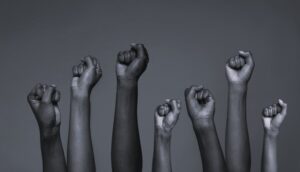
When we think of protest, we often imagine placards, chants, and crowds demanding to be heard—End SARS, Black Lives Matter, End Police Brutality. These are moments when collective frustration spills into public space.
But protests are rarely welcomed by those in power. In many African countries, they are met with violence and suppression. Because of this, protest has often found a safer, more enduring form: literature.
Protest literature refers to literary works—fiction, essays, poetry—that challenge social, political, and cultural injustices. Rather than shouting slogans, these texts expose systems, interrogate power, and demand change from within the pages of a book.
AFRICAN LITERATURE AS PROTEST LITERATURE
Although African literature is not the only space where you will find protest, it is by far the most saturated. This did not happen by chance but because of the injustices suffered by Africans during colonisation, and the subsequent struggle for decolonisation in literature.
Most African fiction have elements of protest in them. Here’s a few.
- Weep Not, Child by Ngugi Wa Thiong’o
- Anthills of the Savannah by Chinua Achebe
- Stay With Me by Ayobami Adebayo
To expand:
WEEP NOT, CHILD BY NGUGI WA THIONG’O:
This 1964 novel takes place during the Mau Mau Uprising and is about the struggle of the people of Kenya against the oppression from the British colonists and the subsequent beating down of the Kenyans due to the British’s method of divide and conquer. The story is seen through the eyes of Njoroge, a young Kenyan whose coming of age is affected badly by the events that take place during those final years of British rule.
Weep Not, Child is a protest novel because not only does it show the sad reality of Kenya in those times, but it also gives ample hints at Ngugi’s belief that to conquer the oppressors the Kenyan people must refuse to be divided and instead fight as a collective. This way, they would be able to reclaim their freedom, their land and their integrity.
ANTHILLS OF THE SAVANNAH BY CHINUA ACHEBE:
Anthills of the Savannah (1987) is Chinua Achebe’s fifth novel. The satirical novel is about three friends, Sam, Chris Oriko, and Ikem Osodi in the fictional West African nation of Kangan during the aftermath of a military coup in Kangan. Sam, a career soldier is installed as the new military dictator and he installs his friends in high-level positions; Chris becoming the Minister of Information and Ikem the editor of a national newspaper, The Gazette.
Anthills of the Savannah is considered protest literature because the novel was written to mirror the violent coups and insurgencies of 1960s Nigeria, to challenge a corrupt government, and to show both the futility of and the hope for change.
Protest literature is not limited to protest against the government and colonialism. The following novel shows this.
STAY WITH ME BY AYOBAMI ADEBAYO:
This debut novel published in 2017 is a protest against the pressure placed on married couples to bear children and the effects of this pressure on a couple who cannot.
Ayobami Adebayo introduces us to a married couple, Yejide and Akin, who are madly in love and whose love is tested when a new wife is introduced into the home because Yejide did not bear Akin a child. It raises the question of infertility, of motherhood and how it shapes a woman’s place in society, and of mental health in the Nigerian clime.
WHY IS AFRICAN LITERATURE CONSIDERED PROTEST LITERATURE?
Simple.
Because all writers write from their experiences and the environment to which they belong. And African writers write from pressure points. From histories shaped by colonisation, from governments that fail their people, from social systems that silence women, the poor, and the vulnerable. To write honestly in such environments is already an act of resistance.
African literature protests because Africans protest. And as long as injustice remains part of our lived reality, our stories will continue to bear witness, demand attention, and refuse silence.


This is an expository. Thanks for taking the time to curate this, I have also read three more novels through this article.
Thank you for reading through. I’m glad you enjoyed the post.
Also, three novels? That’s amazing!